


61,38 zł
Sprzedaje firma Libristo
Jak sortujemy?
Darmowa dostawa z PremiumKurierem od 49,00 zł
Dołącz do Premium
Dostawa za darmo w apce od 100,00 zł
Lub na empik.com najtaniej za 13,99 złDostawa i płatność
Przewidywany czas wysyłki29-30 dni roboczych
Szczegóły
Sprzedawca zagraniczny
Więcej informacji
Zwrotdo 14 dni
Zwroty
Wszystkie produkty sprzedawcy
Produkt sprzedają inni sprzedawcy (2)
PokażTaniej od 42,77 zł
Dostępna 1 opcja od 42,77 zł
Outlet
Informacje szczegółowe
Pokaż wszystkieProgram Ochrony Kupujących
Na empik.com kupujesz bezpiecznie.
Każdy sprzedawca w empik.com jest przedsiębiorcą. Wszystkie obowiązki związane z umową sprzedaży ciążą na sprzedawcy. Za wysłanie produktu odpowiada sprzedawca.
Opis produktu
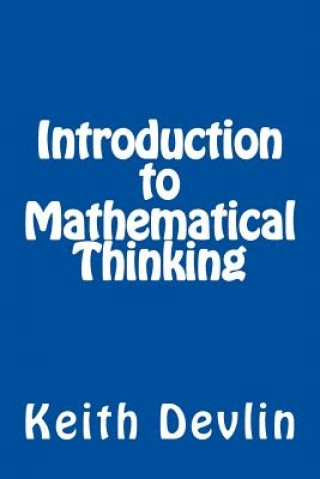
Mathematical thinking is an invaluable skill in today's world, going beyond mere arithmetic. It involves approaching problems with logic, analysis, and precision, offering a versatile toolset for understanding diverse scenarios. Unlike traditional mathematics, which often sticks to formulas and calculations, mathematical thinking is a broader, more strategic way of approaching issues analytically. Although not an inherent thinking style, it can be learned with time and effort. Traditionally, fields such as mathematics, science, and engineering demand math proficiency, which requires extensive formal education. However, the ability to think mathematically can be acquired in a relatively short time, roughly six weeks, for those with a high school math background. Although the concept doesn't exclusively revolve around math, mathematical principles serve as a perfect playground for developing such thought processes. This forms the basis of Keith Devlin's concise yet impactful book, designed to aid first and second-year STEM students at universities, as well as high schoolers planning to enter STEM fields in higher education. The book addresses the common struggle students face when moving from high school to university mathematics, where the focus shifts drastically towards abstract thinking.To ease this academic transition, many institutions offer a "transition course," for which this book could ideally serve as a main or supplementary text. Moreover, its engaging, concise nature makes it accessible to anyone eager to enhance their analytical skills. By mastering mathematical thinking, STEM students can transform college-level math from something perplexing into an attainable challenge. Authored by Dr. Keith Devlin, a renowned mathematician from Stanford University, this book draws on his extensive experience and numerous accolades, including the Pythagoras Prize and the Carl Sagan Award. Dr. Devlin, recognized by many from NPR's "Weekend Edition" as "the Math Guy," shares his insights through various blogs and books, contributing to a more profound understanding of mathematics in everyday life.
Powyższy opis pochodzi od wydawcy.
Informacje szczegółowe
| ID produktu: | 1768061027 |
|---|---|
| Tytuł: | Introduction to Mathematical Thinking |
| Autor: | |
| Wydawnictwo: | |
| Język wydania: | angielski |
| Liczba stron: | 102 |
| GPSR - osoba odpowiedzialna i certyfikaty: |
Oceny i recenzje o produkcie
Nikt jeszcze nie dodał recenzji tego produktu.
Bądź pierwszy!Twoja opinia będzie bardzo przydatna dla innych użytkowników.
Najpopularniejsze serie
Dobre na prezent
Bestsellery książkowe
Lektury szkolne
Serie dla młodzieży
Popularni autorzy
Przeczytaj więcej o…
Pokaż więcej
Poznaj Empik
Empik Pasje
Nasze produkty
EmpikPlace (Marketplace)
Outlet Empik
Do 200 zł na pierwsze zakupy w aplikacji. Pobierz i korzystaj z kodów zniżkowych. Dowiedz się więcej




Nasze projekty dofinansowane
ze środków Funduszy Europejskich

PARTNERZY LOGISTYCZNI:


OPERATOR PŁATNOŚCI:


NALEŻY DO:


