Informacje szczegółowe
Pokaż wszystkieKażdy sprzedawca w empik.com jest przedsiębiorcą. Wszystkie obowiązki związane z umową sprzedaży ciążą na sprzedawcy. Za wysłanie produktu odpowiada sprzedawca.
Opis produktu
wytwórnia: PI Recordings, 2024
nośnik: CD, format: CD, ilość nośników: 1
digipack
nr kat.: PI94
czas: 58:35
jazz/yass/impro
muzycy:
David Virelles, Steinway D piano, marímbula
Julio Barreto (3, 9, 14), cajón, guataca, conga, claves
1. Spacetime 2:10
2. Ocho 4:06
3. Ghost Town 3:21
4. Rezo 3:27
5. A Tres Voces 0:45
6. Nacen 3:13
7. Al Compas De Mi Viejo Tres 4:23
8. Simple Answer 3:11
9. Ignacio Villa 5:04
10. Danza De Rosario 5:40
11. Mambo Escalonado 4:57
12. Tessellations 3:11
13. Cuando Canta El Cornetin 6:50
14. Portico 3:40
15. Germania 2:16
16. Casa 2:23
JazzPRESS:
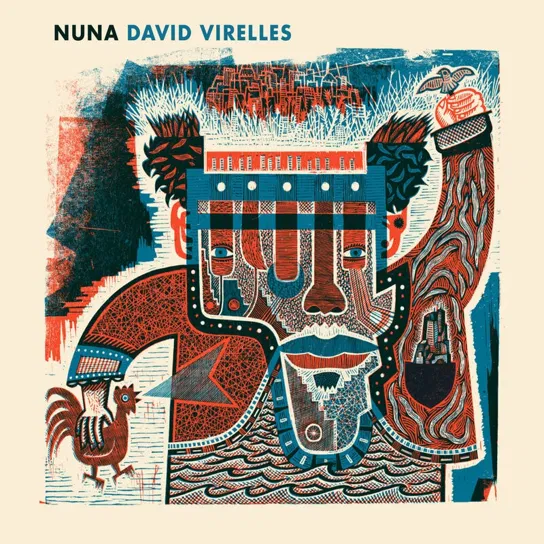
David Virelles w czasie pandemii był niezwykle aktywny na rynku wydawniczym. Brał m.in. udział w projekcie This is Now: Love in the Time of Covid, którym wytwórnia Pi Recordings starała się wspierać swoich artystów (nagrania tego cyklu ukazały się wyłącznie w formie cyfrowej w internecie). Najnowszy album, zatytułowany Nuna, jest z kolei solowym wydawnictwem pianisty, z małym wyjątkiem trzech utworów, w których nagraniu towarzyszył Virellesowi grający na instrumentach perkusyjnych Julio Barreto. Nuna składa się z aż dwudziestu kompozycji, przy czym cztery z nich dostępne są wyłącznie cyfrowo jako utwory dodatkowe.
Płyta pomyślana została jako hołd dla… fortepianu. Pokaz możliwości instrumentu, a także swoisty przegląd subiektywnie dobranych, bliskich wykonawcy stylów muzycznych. Większość nagrań jest autorstwa samego Virellesa, ale w programie płyty znalazły się także dwa dzieła kubańskich twórców – Mariano Merceróna i Sindo Garaya.
Całość rozpoczyna się w sposób dość przekorny, utworem Spacetime, w którym Virelles zagrał wyłącznie na marimbuli. Kolejne utwory sięgają w inspiracjach ku wspomnianej już muzyce z Kuby, klasyce, kompozycjom i instrumentalistom z Afryki. W dołączonym do płyty tekście Virelles wymienia nazwiska Aleksandra Scriabina, Fryderyka Chopina, a także pochodzącego z Algierii Mustaphy Skandraniego oraz Etiopczyka Emahoya Tsegué-Maryam Guèbrou. Virelles kapitalnie połączył różne muzyczne światy. Część z nich przedstawił w formie rozbudowanej, kilku poświęcił zaledwie miniatury – A Tres Voces nie trwa nawet minuty. Całość tworzy fantastyczny recital. Urokliwe melodie przeplatają się z jazzową improwizacją. Doniosłość klasyki zderza się z tanecznymi rytmami Kuby.
Nuna – jak wspomniałem wcześniej – miała być formą adoracji fortepianu. Fantastyczne wykonanie sprawiło, że album stał się również demonstracją potencjału artysty. Virelles nie jest wprawdzie nowicjuszem, ale dzięki solowej płycie niewątpliwie umocnił swój wizerunek muzyka wybitnego, wartego szczególnej uwagi.
autor: Krzysztof Komorek
All About Jazz * * * *:
Cuban-born pianist/composer David Virelles has never been far from the top of the jazz profession in his recording career. His initial appearance as a sideman was with Juno Award winner Jane Bunnett on her 2001 Blue Note release Alma de Santiago. Early in his career he studied with Henry Threadgill and played with Steve Coleman, Chris Potter and Mark Turner. As a leader, he has primarily moved back and forth between the prestigious labels Pi Recordings and ECM for the past decade. Virelles has recorded with the late Tomasz Stańko, Ben Street, Andrew Cyrille, and Roman Diaz. As a leader, Virelles tends to work with mid-size ensembles but his new album Nuna is mostly a solo project.
As a pianist/composer, Virelles shares much with his countryman Aruán Ortiz. Both are classically trained pianists, natives of Santiago de Cuba who emigrated to New York. Though both have an affinity for progressive jazz and genre-blending, their sounds differ. In the semi-isolated setting of Nuna, Virelles brings a clandestine quality to his music. He opens the sixteen-track collection playing the marimbula on "Spacetime." The instrument is native to the Caribbean and in Cuba it is often used in changüí. It is essentially a giant version of the thumb piano keys mounted on a cajon-type box. The clipped bass notes set the unusual tone for the album.
Moods and styles vary throughout the set of compact compositions. "Cuando Canta El Cornetln" could be drifting out of a small Havana social club like a dance between Creole variegation and the Harlem Renaissance. Virelles is joined by multi-percussionist Julio Barreto, a colleague of Gonzalo Rubalcaba in the 1990s. A fellow Cuban artist, he appears in "Ghost Town," "Ignacio Villa," and "Portico," adding fluctuating energy to the latter two pieces.
Like a painter, Virelles gives us contrast and does so in liquid motions that carry our ears along seamlessly. His influences encompass the classics, great Cuban composers, and avant-garde experimentalism. The music on Nuna doesn't flag any particular inspiration nor does it try hard to impress. But impress it does.
By Karl Ackermann
DownBeat:
It’s impossible to sum up David Virelles’ music in one word, but if one were forced to do so, “limitless” is better than most. The Cuban-American keyboardist/composer’s recordings have combined Cuban and classical forms, hip-hop grooves and avant-garde dissonance, ceremonial chants and fluid jazz improvisation to express a musical concept that uses ancient roots to inform future dreams.
The recording at hand is Virelles’ response to the incontrovertible limits upon assembly imposed by the COVID-19 pandemic. What, after all, is a piano player to do when they can’t convene a band or audience?
Play piano, of course. Aside from its first track, which is played on the marimbula (a large, bass-register variant on the thumb piano), Virelles plays only piano on Nuna. He plays it alone, save for some percussion supplied by Julio Barreto on three of the album’s 16 (20 on the accompanying download, if you purchase it from Bandcamp) tracks.
From the first phrases of “Ocho,” Virelles’ unwillingness to accept confinement is on display. The delicacy with which Virelles mutes notes on “Rezo” attests to his command of his instrument.
He gets everything he needs from his forthright touch on the keys, his moderating use of pedals and his encyclopedic stylistic reach. However, the injection of rhythmic intrigue that takes place each time Barreto appears suggests that while Virelles has a lot to say on the piano, he plays best with others.
By Bill Meyer
Informacje szczegółowe
| ID produktu: | 1475830691 |
|---|---|
| Tytuł: | Nuna |
| Wykonawca: | Virelles David |
| Dystrybutor: | |
| Data premiery: | 2024-04-12 |
| Rok nagrania: | 2024 |
| GPSR - osoba odpowiedzialna i certyfikaty: |
Oceny i recenzje o produkcie
Nikt jeszcze nie dodał recenzji tego produktu.
Bądź pierwszy!Twoja opinia będzie bardzo przydatna dla innych użytkowników.