


85,90 zł
Sprzedaje firma serpent
Jak sortujemy?
Dostawa najtaniej za 12,90 zł
Dostawa i płatność
Przewidywany czas wysyłki1 dzień roboczy
Szczegóły
Zwrotdo 14 dni
Zwroty
Wszystkie produkty sprzedawcy
Informacje szczegółowe
Pokaż wszystkieData premiery:
2026-01-01
Rok nagrania:
2026
Rodzaj opakowania:
Card sleeve
Producent:
Fundacja Słuchaj!
Program Ochrony Kupujących
Na empik.com kupujesz bezpiecznie.
Każdy sprzedawca w empik.com jest przedsiębiorcą. Wszystkie obowiązki związane z umową sprzedaży ciążą na sprzedawcy. Za wysłanie produktu odpowiada sprzedawca.
Opis produktu
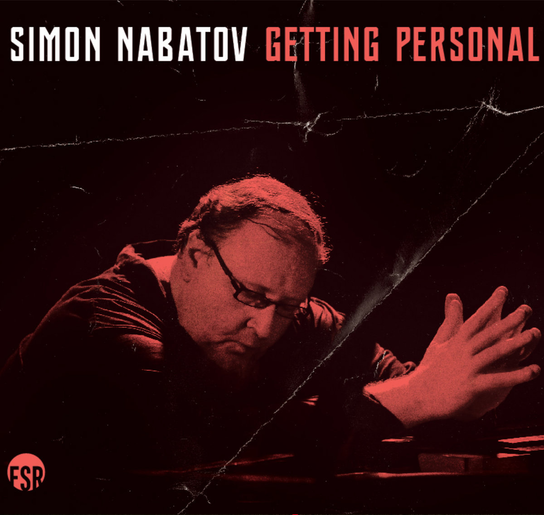
Simon Nabatov - Getting Personal
wytwórnia: Fundacja Słuchaj!, 2026
nośnik: CD, format: CD, ilość nośników: 2
kartonowy ecopack
nr kat.: FSR02/2026
czas: 70:36; 77:08
Kupujesz od oficjalnego dystrybutora i wspierasz tym samym wydawcę i artystę!
jazz/yass/impro
1. Distant Fields 08:15
2. Pious Me 10:02
3. Elegant Dispute 08:17
4. Good Service 05:11
5. Shofars 04:50
6. Fronts Defined 04:00
7. Mixing It Up 07:23
8. Strechting The Truth 03:56
9. Teaching And Learning 09:10
10. The Unavoidable 09:44
CD 2:
11. All The Sorrows 12:06
12. Getting Away With Murder 03:32
13. Retreat And Charge 12:56
14. Relentless 08:11
15. Victorious 07:16
16. Her Childhood 08:49
17. One Against The Mob 07:39
18. What Goes Up 16:36
wytwórnia: Fundacja Słuchaj!, 2026
nośnik: CD, format: CD, ilość nośników: 2
kartonowy ecopack
nr kat.: FSR02/2026
czas: 70:36; 77:08
Kupujesz od oficjalnego dystrybutora i wspierasz tym samym wydawcę i artystę!
jazz/yass/impro
CD1:
Frank Gratkowski - alto sax, clarinets, flute
Ina Stock - oboe
Lucia Mense - recorders
Alex Lindner - violine
Axel Porath - viola
Nathan Bontrager - cello
Simon Nabatov - piano, composition
recorded June 19, 2024 in LOFT Cologne
CD2:
Angelika Niescier - alto sax
Pascal Klewer - trumpet
Shannon Barnett - trombone
Axel Porath - viola
Nathan Bontrager - cello
Roger Kintopf - bass
Alex Parzhuber - drums
Simon Nabatov - piano, composition
recorded October 9, 2024 in LOFT Cologne
CD 1:
1. Distant Fields 08:15
2. Pious Me 10:02
3. Elegant Dispute 08:17
4. Good Service 05:11
5. Shofars 04:50
6. Fronts Defined 04:00
7. Mixing It Up 07:23
8. Strechting The Truth 03:56
9. Teaching And Learning 09:10
10. The Unavoidable 09:44
CD 2:
11. All The Sorrows 12:06
12. Getting Away With Murder 03:32
13. Retreat And Charge 12:56
14. Relentless 08:11
15. Victorious 07:16
16. Her Childhood 08:49
17. One Against The Mob 07:39
18. What Goes Up 16:36
2024 was for me the year to look inwards and address in my work a couple of personal, somewhat uncomfortable subjects, something I wanted to do for a long time. This double-album is the result of this process.
My deep gratitude goes to Benedikt Müller, Hans Martin Müller, Thomas Baerens, Csaba Kézér, Hermann-Christoph Müller, Stefan Deistler, Pavel Borodin, Erhard Hirt, Alex Minkin, Maciej Karlowski, SEMAFOR and all the musicians who made it possible.
CD1: Your ID Please
The suite deals with my somewhat complicated biography and identity, split and unresolved to this day. The ensemble is chosen to reflect on it - the trio of reed instruments represents the Jewish roots (often ill-fitted, "out of tune", awkward outsiders, minority) and the string trio represents the majority (established, ruling, power). Between the two trios - piano (myself), jammed in the middle. (see the photo)
The pieces are scenes from the two disparate worlds co-existing, dealing with each other, with attempts to get closer and failures to do so, a constant tug of war. Music is the reflection on my personal memories, much more so than on common knowledge of the subjects.
1 Distant Fields
Memories of growing up in Russia (Soviet Union) - vast landscapes, melancholic moods, simplified unity of the majority with a hidden fracture in it - as told by the string section.
Reeds are expressing more complicated, convoluted, disorderly gestures.
Attempts to combine both surroundings leading to confusion and long-term conflicts.
The slow ending incorporates, among other themes, a time-stretched Russian folk song, the TV-theme from a program for the kids, watched religiously at 8:15 pm for decades.
2 Pious Men
Both groups are presented and explored, first the Jewish closed-up universe, then the episode of the strings, reminiscing classical music, something I was surrounded and influenced by to a great degree.
Second part is a memory of going as a little boy with my parents to the Moscow Central Synagogue and being amazed by the "otherness" of what was supposed to be part of me (but wasn't really).
3 Elegant Disputes
Sentences of argumentations are thrown back and forth, a polite conversation turns into disruptive chaos, only to calm down and settle into seemingly peaceful conclusion.
4 Good Service
Growing up in Moscow back then, if one wanted to get in touch with the spiritual aspects of life, one could experience it practically only in a Russian Orthodox church. It was a beautiful world, full of grace and mystery. Even though it was supposed to be completely foreign to Jewish life, it influenced me a lot, in more ways than I am able to detect.
5 Shofars
Reed players put down their main instruments, and pick up Shofars, the traditional ram horn instruments played to usher in the Jewish New Year. Their pre-programmed struggle to play anything decent on these unknown to them instruments depicts and enhances the peculiarity of the world these sounds came from.
6 Fronts Defined
This is a sound collage of the colliding musical worlds heard on radio and tv back then.
The penetrating sounds of the official dominating culture of social realism and folk music, clashing with either tolerated or illegally obtained Jewish music (heard often in our apartment thanks to my father's collection of vinyl).
7 Mixing it up
This piece deals with the situations where the both worlds tried to mesh into one - in the beginning it's the artistic attempts, the second part depicts the mixed couples and their very special circumstances in that supposedly anti-racist world of the late Socialism. Lethargic "out-of-tune" episode comments on the results.
8 Stretching the truth
Reflections on the necessity to stretch the truth, hide one's opinions and beliefs, learned early in life as it was dictated by the regime.
9 Teaching and Learning
Deals with the cultural and esthetic differences of the two worlds.
Strings try to show how it's done, Reeds try to emulate, with little success.
The second part tells of my personal refugium found in the world of jazz.
10 The Unavoidable
My personal world of unresolved questions is echoed by the one outside - a permanent struggle, pull-and-push, sometimes well camouflaged, at times erupting in an outright war.
CD2: What my grandfather could tell me
This suite is based on facts and fictional imagery around the life and death of my grandfather on mother's side. He made a steep career in the ranks of NKWD, the evil Secrete Service of the Stalin era. I often thought about what was it like, being a part of the whole, with initial conviction of a zealot and disappointments of the devastating results. Semyon Jakowlewitch Mindal (yes, I am named in his memory) was arrested, tortured and liquidated as a part of Stalin's Cleansings.
I dedicate this piece to him and all the victims of the terror.
1 All the sorrows
An introduction to the world my granddad lived and died in.
Here, and elsewhere throughout the pieces, the conflict of single voice versus oppressive power of the rulers (often expressed through massive vertical stabs of sounds) is clearly formulated. Mournful restatement of the initial material reinforces the contrast.
2 Getting away with the murder
Depicts communists' mindlessly energetic conviction of their right to destroy and murder, disguised by optimistic sloganeering.
3 Retreat and charge
Paints two ways to deal with the oppression (even while serving the oppressors) - resignation and aggression.
4 Relentless
The old winning propaganda strategy - repeat the message till the opponents have no energy to contradict.
5 Victorious
Besides his nasty job, my grandfather had several hobbies. He played violine, collected stamps, and loved cars. According to the story I heard from both grandma and mother, he and a couple of friends assembled a race car and won the Moscow - Gorky - Moscow rally.
6 Her Childhood
My mother was 12 years old when her father was arrested, tortured and subsequently executed. He occupied at that time a rather high position in the secrete service NKWD and enjoyed a pretty luxurious life, living with the family in a huge 12-room apartment in central Moscow. There was even a little zoo for my mother, with exotic birds and animals. My mom led a protected life in a paradise of sorts, till one night everything was taken away.
7 One against the mob
A lonely voice against the majority is the theme. Also the Jewish roots of my grandfather come through in viola's pensive and agitated solo cadenza. In the end the single voice drowns in the dominating outcries.
8 What comes up...
The fate of my grandfather was shared by countless victims of the regime.
The concluding piece deals with the arrest, torture and execution, but also serves as a Requiem for all the fallen.
Informacje szczegółowe
| ID produktu: | 1723802432 |
|---|---|
| Tytuł: | Getting Personal |
| Wykonawca: | Nabatov Simon |
| Dystrybutor: | |
| Data premiery: | 2026-01-01 |
| Rok nagrania: | 2026 |
| GPSR - osoba odpowiedzialna i certyfikaty: |
Oceny i recenzje o produkcie
Nikt jeszcze nie dodał recenzji tego produktu.
Bądź pierwszy!Twoja opinia będzie bardzo przydatna dla innych użytkowników.
Popularni artyści
Polecane płyty
Polecane zespoły
Największe przeboje znanych artystów
Popularni zagraniczni artyści
Muzyczne TOP
Pokaż więcej
Poznaj Empik
Empik Pasje
Nasze produkty
EmpikPlace (Marketplace)
Outlet Empik
Do 200 zł na pierwsze zakupy w aplikacji. Pobierz i korzystaj z kodów zniżkowych. Dowiedz się więcej




Nasze projekty dofinansowane
ze środków Funduszy Europejskich

PARTNERZY LOGISTYCZNI:


OPERATOR PŁATNOŚCI:


NALEŻY DO:


