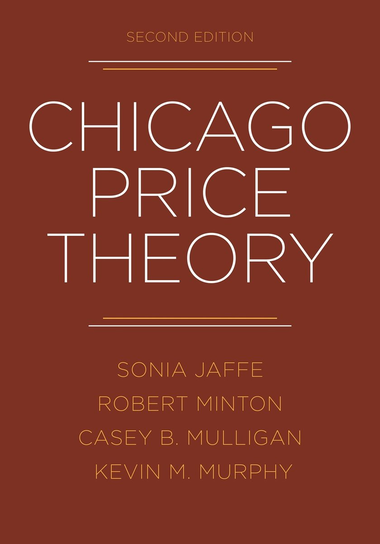
Chicago Price Theory
Informacje szczegółowe
Pokaż wszystkieKażdy sprzedawca w empik.com jest przedsiębiorcą. Wszystkie obowiązki związane z umową sprzedaży ciążą na sprzedawcy. Za wysłanie produktu odpowiada sprzedawca.
Opis produktu
An authoritative textbook based on the legendary economics course taught at the University of Chicago—now fully updated and expanded
Price theory is a powerful analytical tool kit for measuring, explaining, and predicting market outcomes. This expanded second edition of Chicago Price Theory offers a unique approach to the subject, emphasizing hands-on, practical applications that can help students adeptly integrate economic theory with real-world forces. A key distinction is its focus on market equilibrium and gains from trade. Unlike many microeconomics texts, this book emphasizes how, through markets, households and businesses adapt to conditions like price controls and externalities. It modernizes the Marshallian idea of forward-falling supply, especially for analyzing human capital, and makes use of the cost function and Hicks-Marshall laws to analyze a variety of economic phenomena. Rooted in Chicago’s price theory tradition, this textbook enables students to understand human behavior through the lens of price theory, showing how a small set of well-mastered tools makes it possible to analyze a remarkably wide range of economic questions.
Now includes a full chapter closely integrating economic reasoning with the treatment-control paradigm
Covers topics such as occupational choice, the evolution of inequality, the value of a statistical life, prohibition, and competition
Uses the economics of “nudges” to understand business contracts and the organization of civil society
Features analysis of business-to-business transactions
Discusses the future implications of artificial intelligence
Comes with lesson plans for minicourses in industrial organization, health economics, macroeconomics, labor, public finance, and urban economics
Accompanied by video lectures taught by Kevin M. Murphy, Gary Becker, Casey B. Mulligan, and Robert Minton
Informacje szczegółowe
| ID produktu: | 1705372353 |
|---|---|
| Tytuł: | Chicago Price Theory |
| Autor: | |
| Wydawnictwo: | |
| Język wydania: | angielski |
| Liczba stron: | 456 |
| GPSR - osoba odpowiedzialna i certyfikaty: |
Oceny i recenzje o produkcie
Nikt jeszcze nie dodał recenzji tego produktu.
Bądź pierwszy!Twoja opinia będzie bardzo przydatna dla innych użytkowników.